Cooling Tower Bactericides & Antimicrobials
Ensure the biological safety of your facility with our Industrial-Grade Bactericides. Formulated to target Sulfate Reducing Bacteria (SRB) and Legionella, our chemicals eliminate the microbes responsible for under-deposit corrosion and hazardous aerosol transmission in cooling utilities.
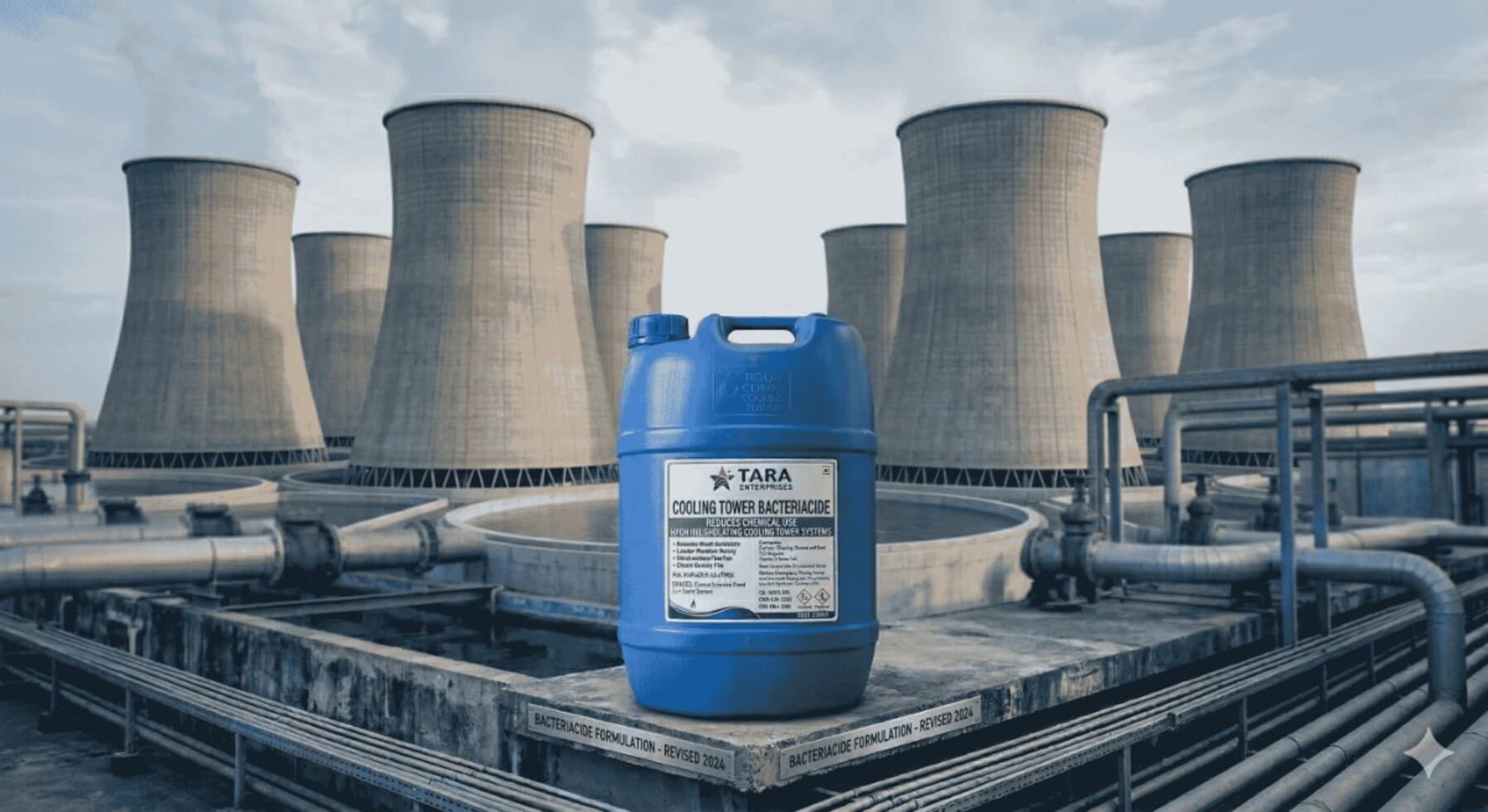
Defending Against Microbiological Corrosion
Uncontrolled bacterial growth leads to Microbiologically Induced Corrosion (MIC), where localized acidity underneath slime layers causes rapid pipe pitting. Our Advanced Antimicrobials provide a robust defense, breaking through extracellular polymers to sterilize the system and protect expensive condenser metallurgy.
- Effective Against Aerobic & Anaerobic Bacteria
- Controls Slime-Forming Microorganisms
- Inhibits H2S Production from Sulfate-Reducing Bacteria
- Penetrates Bio-Fouling for Total System Hygiene
- Safe for Use with Standard Cooling Water Inhibitors
- Reduced Resistance Build-up compared to standard disinfectants
Antimicrobial Portfolio
- ✔ Non-Oxidizing Organic Bactericides
- ✔ Glutaraldehyde & Isothiazolinone Blends
- ✔ DBNPA Rapid Response Biocides
- ✔ SRB Specific Control Agents
- ✔ Closed-Loop System Disinfectants
- ✔ Quaternary Ammonium Compounds
Technical Specifications
| Active Range | Effective against SRB, Legionella, & Pseudomonas |
| Physical State | Concentrated Liquid / Clear Amber |
| Compatibility | TFC Membranes & All System Metallurgy |
| Operating pH | Stable between pH 6.0 and 9.5 |
| Standard Packaging | 20L, 50L, and 210L HDPE Drums |
Selection Guide
| Microbe Target | Application Method | Primary Action |
|---|---|---|
| Legionella / Pathogens | Shock Dose (Post-Clean) | Total System Sterilization |
| SRB (Anaerobic) | Continuous / Weekly Dose | Prevents Metal Pitting |
| Slime Bacteria | Intermittent Slug Dose | Bio-film Disruption |
| System Recovery | High Concentration Soak | Restores Fouled Sumps |
Sterilized Cooling Loops for Workplace Safety
Combat harmful bacterial growth and prevent microbiologically induced corrosion with our targeted antimicrobial solutions, available for dispatch across the Baddi industrial hub.
Tara Enterprises is a specialized provider of Cooling Tower Bactericides in Baddi, ensuring pharmaceutical and industrial units maintain strict hygiene standards. High bacterial counts in your cooling water do more than just lower thermal efficiency—they create a dangerous environment for staff through aerosol drift.
For systems operating with high-sulfate water, our SRB Control Programs stop the production of hydrogen sulfide, the gas responsible for the "rotten egg" smell and aggressive pipe wall thinning.
Broad Efficacy
Formulated to kill even the most resistant bacterial strains found in industrial sumps.
H2S Elimination
Actively prevents the metabolic processes of sulfate-reducing bacteria.
OSHA/PCB Compliance
Helps maintain biological safety levels required for industrial health audits.
Metal Protection
Eliminating bacteria stops the localized acid production that causes MIC pitting.
Whether you need Continuous Micro-Dosing for a process chiller or a Sanitizing Shock Treatment for an HVAC tower, we provide the microbiological test kits and chemicals to ensure total control of your cooling system's health.
Analytical & Hygiene Spares
Microbial Audit
Concerned about bacterial counts? We provide on-site microbial dip-slide testing to quantify bacteria and fungi levels in your cooling system.
Speak to MicrobiologistFrequently Asked Questions
What are Sulfate Reducing Bacteria (SRB) and why are they harmful?
SRB are anaerobic bacteria that live under sludge and slime. They produce H2S gas which directly attacks steel, leading to deep, localized 'pitting' corrosion that can cause pipe failure in months.
How is a bactericide different from an algaecide?
While some biocides are broad-spectrum, algaecides specifically target photosynthetic organisms like algae. Bactericides are designed to penetrate complex cell walls of bacteria and fungi.
How often should I dose bactericide?
Dosing depends on the bacterial loading. Usually, we recommend a 'shock' or 'slug' dose twice a week to keep the total viable count (TVC) below 10,000 cfu/ml.
Does temperature affect bactericide efficiency?
Yes. Most bacteria thrive in the 25°C to 45°C range (common in cooling water). Our bactericides are specifically selected to remain stable and lethal at these industrial operating temperatures.