Polyelectrolytes & Polymer Flocculants
Accelerate your water clarification process with our High-Molecular Weight Polyelectrolytes. Available in Anionic and Cationic variants, our polymers bridge micro-flocs into large, heavy aggregates for rapid settling in ETPs and efficient cake formation in sludge dewatering.
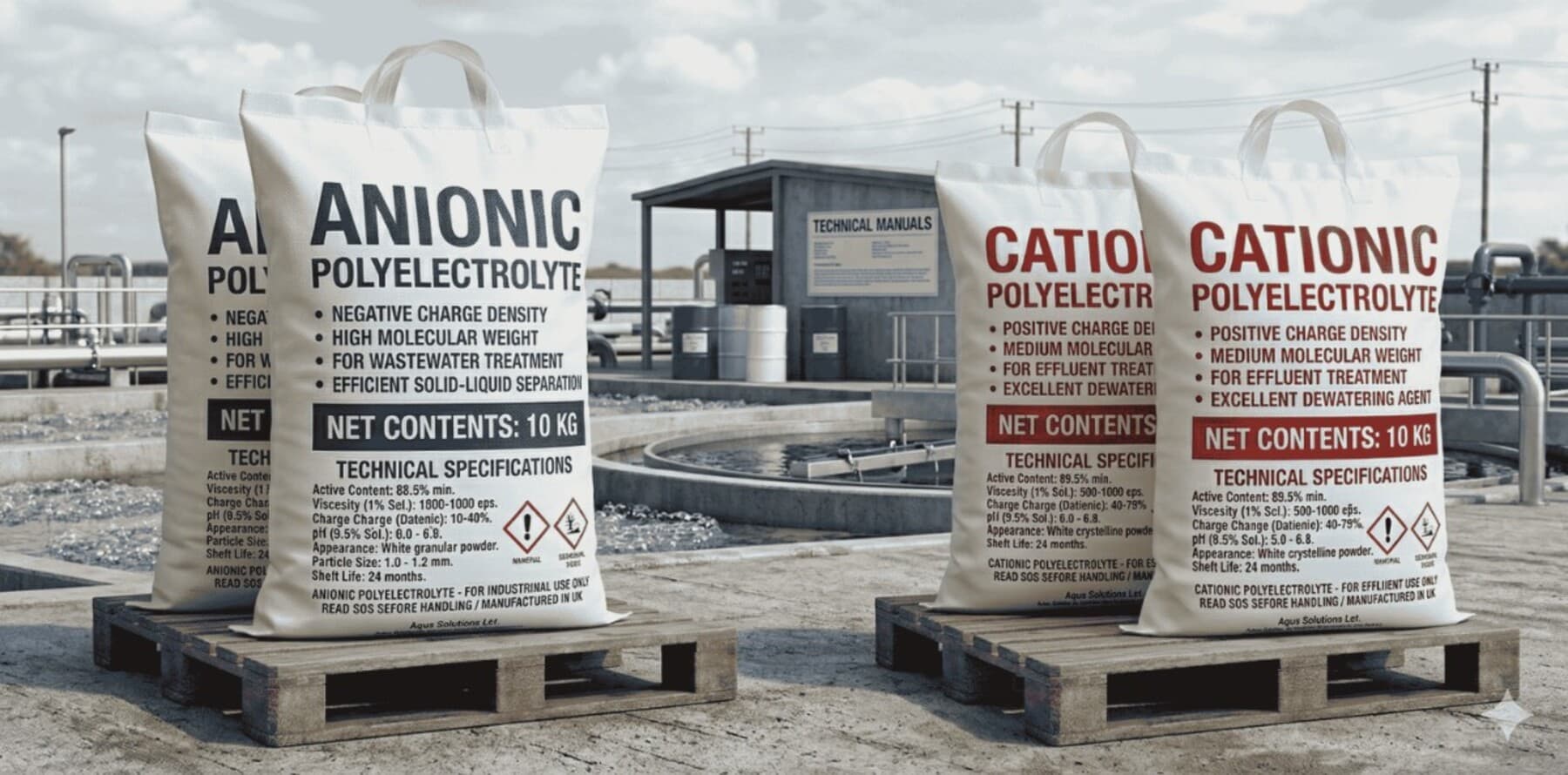
Optimized Flocculation for Industrial Waste
Solid-liquid separation efficiency defines the success of a treatment plant. Our Acrylamide-based Polymers act as powerful flocculants that dramatically increase settling velocity. By neutralizing surface charges and creating physical bridges between particles, our chemicals ensure low turbidity discharge and high-dryness sludge cakes.
- Highly Effective at Very Low Dosing Levels (ppm)
- Improves Water Clarity & Reduces Suspended Solids
- Increases Centrifuge & Filter Press Efficiency
- Wide pH Range Operational Stability
- Superior Decanting and Thickening Performance
- Rapid Dissolution for On-site Batch Preparation
Polymer Varieties
- ✔ Anionic Polyelectrolyte (ETP Clarification)
- ✔ Cationic Polyelectrolyte (Sludge Dewatering)
- ✔ Non-Ionic Polyelectrolyte (Specific Processes)
- ✔ Emulsion Polymers (Liquid Form)
- ✔ High/Medium/Low Charge Densities
- ✔ Coagulant Aids for PAC/Alum
Technical Specifications
| Molecular Weight | 12 Million to 22 Million (Ultra High) |
| Physical Appearance | White Granular / Fine Powder |
| Bulk Density | 0.75 - 0.85 g/cm³ |
| Degree of Ionization | 10% to 80% (Varies by grade) |
| Standard Packaging | 25KG / 50KG HDPE Laminated Bags |
Selection Guide
| Polymer Type | Application | Key Output |
|---|---|---|
| Anionic Poly | ETP Settling / Clarification | Fast Settling / Clear Water |
| Cationic Poly | Sludge Dewatering / Centrifuge | Dry Cake / Easy Separation |
| Coagulant Aid | Pre-treatment Clarifiers | Stronger Flocs / Low Alum Use |
| Non-Ionic Poly | Mining & Metal Pickling | Acid Stable Flocculation |
Advanced Polymers for Rapid Water Clarification
Dramatically improve your ETP efficiency and reduce sludge hauling costs with our high-activity polyelectrolytes, stocked for bulk supply in Baddi.
Tara Enterprises is a specialized provider of Polyelectrolytes in Baddi, supporting the pharmaceutical, textile, and paper industries of Himachal Pradesh. Our polymers are selected for their long-chain stability and high charge density, ensuring they remain effective even in highly agitated or chemical-heavy effluent streams.
For municipal and industrial sludge dewatering, our Cationic Polyelectrolytes are the industry standard, providing the necessary charge neutralization to release bound water from biological and chemical sludge in belt presses and centrifuges.
Bridging Effect
Long polymer chains physically trap micro-particles to form larger, settleable aggregates.
Sludge Cake Dryness
Reduces moisture content in sludge, significantly lowering disposal and transport costs.
Filtrate Quality
Produces ultra-clear filtrate water, suitable for tertiary treatment or recycle.
Low Dosing Cost
Effective at concentrations as low as 0.1 to 1.0 ppm, ensuring high ROI.
Whether you are performing Jar Testing to find the right polymer or looking for a bulk Institutional Supplier for your sewage plant, we provide the technical expertise and logistics to ensure your solids-removal process is optimized.
Flocculation Chemistry
Polymer Jar Test
Choosing the wrong charge density can waste money and clog filters. We offer free on-site jar testing to find the exact polymer for your effluent.
Request Jar TestFrequently Asked Questions
What is the difference between Anionic and Cationic Polyelectrolytes?
Anionic polymers have a negative charge and are used for settling heavy micro-flocs in ETPs (after coagulants). Cationic polymers have a positive charge and are primarily used for sludge dewatering in centrifuges and filter presses.
How do I prepare the polymer solution?
Polymers must be 'aged' to work. Dissolve the powder in water to create a 0.1% to 0.5% solution. Mix slowly for 45-60 minutes to allow the polymer chains to fully uncoil before dosing into the effluent.
Why is my polymer solution not forming flocs?
This usually happens due to over-mixing (breaking the chains), using hard water for preparation, or choosing the wrong charge density. A fresh jar test is recommended to verify the grade.
What is the shelf life of the powder?
In dry, cool conditions, the powder can last for 2 years. However, once dissolved in water, the liquid solution should be used within 24-48 hours as it will lose its activity quickly.