High-Performance Cooling Towers for Industrial Heat Rejection
Durable FRP Induced Draft Cooling Towers engineered for maximum heat transfer efficiency — built to perform in harsh industrial environments while reducing water and power consumption.
200+
Towers Delivered
FRP
Corrosion Proof
30%
Power Savings
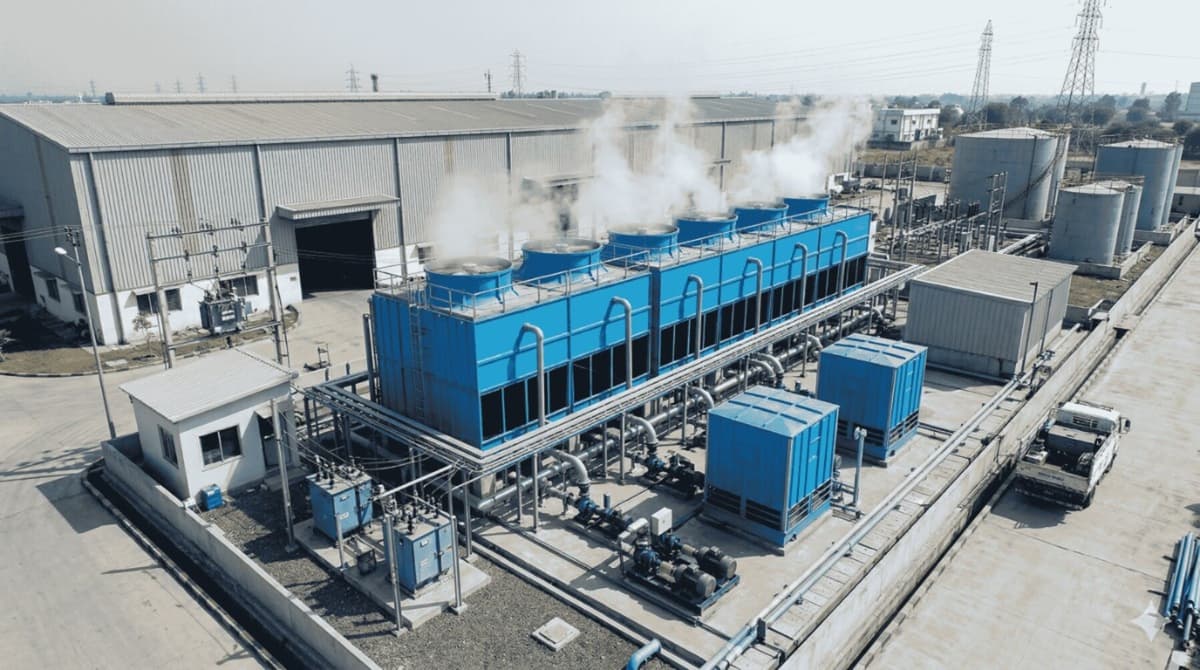
About Cooling Towers
Our Industrial Cooling Towers are designed to extract waste heat from water used in industrial processes or HVAC systems. By utilizing the evaporation principle, our towers cool process water efficiently for reuse in machinery and condensers.
Constructed from high-quality Fiberglass Reinforced Plastic (FRP), our towers are resistant to corrosion, chemicals, and UV rays, ensuring a long operational life in the demanding climate of Baddi and Himachal Pradesh.
Maximum Airflow
Aerodynamically designed fans for high volume air-water contact.
Durable Fills
PVC honeycomb fills provide high surface area for better cooling.
Non-Corrosive
Complete FRP body prevents rust even in acidic environments.
Quiet Operation
Low-noise fans ideal for hospitals and commercial buildings.
Applications of Cooling Towers
Essential for any facility requiring thermal regulation, our towers support critical machinery and HVAC infrastructure.
Plastic Injection
Cooling moulds and hydraulic oils for consistent production quality.
HVAC Systems
Centralized air conditioning for malls, offices, and large halls.
Chemical Plants
Regulating temperatures for exothermic chemical reactions.
Power Generators
Cooling jacket water and lube oil in DG sets and power units.
Food Processing
Essential for pasteurization and refrigeration condenser cooling.
Steel Plants
Cooling furnace components and induction heating coils.
Key Features of Our FRP Towers
FRP Casing
Weatherproof, fire-retardant, and highly durable fiberglass shell.
Aluminium Fans
Adjustable pitch axial fans for optimal air management and low DB levels.
Drift Eliminators
Minimizes water loss by trapping droplets before air leaves the tower.
PVC Fills
UV-stabilized PVC fills for efficient heat exchange and fouling resistance.
VFD Compatible
Ready for Variable Frequency Drives to maximize energy savings.
Low Maintenance
Easy access to internal parts and spray nozzles for quick cleaning.
Why Choose Tara Enterprises
We combine thermal engineering expertise with high-quality manufacturing to deliver the most reliable cooling towers in the region.
Quality Standards
Manufactured using top-grade resins and components for longevity.
Performance Test
Rigorous testing to ensure the design temperature range is achieved.
Custom Capacities
Available from 5 TR to 500+ TR (Tons of Refrigeration) capacities.
Site Assembly
Professional on-site assembly and commissioning services.
Spare Parts Support
Ready stock of fans, fills, and nozzles for quick replacements.
Happy Clients
Trusted by hundreds of industries in Himachal, Punjab, and Haryana.
Experiencing High Process Temperatures?
Upgrade to our high-efficiency cooling towers or book a maintenance service.
Get a Free Sizing ConsultationIndustrial Cooling Tower Manufacturer in Baddi
High-performance FRP cooling towers designed for maximum thermal efficiency and durability, serving HVAC, power plants, and manufacturing industries across Baddi, Nalagarh, and Pan-India.
Tara Enterprises is a leading cooling tower manufacturer in Baddi, providing robust FRP induced draft cooling towers. Our systems are engineered to handle heavy heat loads while maintaining low drift loss and energy consumption.
Our cooling towers feature high-grade PVC fills, aerodynamic fan blades, and corrosion-resistant FRP bodies to ensure long service life in harsh industrial environments, providing consistent cold water temperatures for process cooling.
Maximum Heat Transfer
Honey-comb PVC fills designed for optimal air-water contact.
Energy Efficient Fans
Aerodynamically balanced fans for low power consumption.
Corrosion Resistant
Heavy-duty FRP casing ensures zero rust and long life.
Low Maintenance
Easy access to nozzles and basins for quick cleaning.
We supply FRP Cooling Towers from 5 TR to 500+ TR, ensuring your industrial chillers and machinery operate at peak performance with reliable, cost-effective thermal management solutions.
Our Water Treatment Solutions
Get Cooling Tower Quote
Expert selection, sizing, and installation support for industrial cooling needs in Baddi.
Talk to Cooling ExpertOptimize Your Industrial Cooling Today
Specializing in **Cooling Towers, RO, ETP, and STP** plants. Let our thermal experts help you choose the right system.
Cooling Tower FAQ
Expert insights into heat rejection technology, scale prevention, and water chemistry management for industrial cooling circuits.